A machine translation of your page will get flagged or deleted on most language editions. Each one runs its own notability and sourcing rules. We translate and adapt your page so it meets the standards of the edition it’s going on.










Every language edition of Wikipedia is run by its own community, with its own notability threshold and sourcing expectations — a page that's solid on English Wikipedia isn't automatically eligible on German or Japanese Wikipedia. Our translators know the target edition's rules, not just the target language.

Every translation is done by a native speaker of the target language, not a machine tool.

We check the target language edition's own notability and sourcing rules before submitting anything.

Citations are supplemented with independent sources published in the target language where required.

Neutral, encyclopedic tone is carried across the translation, not lost in the conversion.
Send us the page and the language. We'll tell you what it will take.
A Wikipedia translation is closer to a new submission than a direct conversion. Here's everything that goes into doing it properly.
The article is translated by a native speaker fluent in both the source content and Wikipedia's editorial conventions in the target language.
A second native-speaking editor reviews the translation for accuracy, tone and fidelity to the original sourced facts.
Where the target edition favors sources published in that language, we locate and add independent coverage to strengthen the article.
The translated draft is checked against that specific language edition's notability and neutrality policies before submission.
Phrasing, idioms and context are adapted so the article reads naturally to native readers, not literally translated.
As the original page is updated, we keep translated versions current so language editions don't drift apart.
Translation runs through the same rigor as writing a new page, because on most editions, that's effectively what it is.
We confirm the source page, the target language, and the edition's specific requirements.
01Independent sources published in the target language are located to strengthen the article.
02The target edition's notability and sourcing rules are checked against the existing content.
03A native speaker translates and adapts the article, preserving tone and factual accuracy.
04A second native-speaking editor reviews the draft before you see the final version.
05The translated page is submitted through the correct process for that language edition.
06
A single English-language Wikipedia page only reaches English-speaking search results, knowledge panels and AI assistants. Adding accurate translations means your public record is consistent everywhere your name or business is searched — not just in the language you happened to publish in first, and not left to whatever a machine translation produces instead.
It also protects against a poorly translated or outdated version appearing on another language edition without your knowledge, written by someone with far less care than you'd want.


Reach every audience that searches for you, in their own language.
Translated and localised across six categories, each checked against the target edition's own standards.

Personal biography pages translated into multiple language editions with locally sourced supporting citations.


Corporate pages localised for markets where the business operates, matched to each edition's sourcing rules.
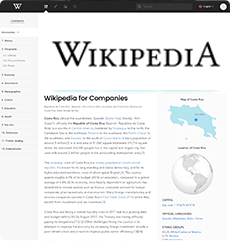
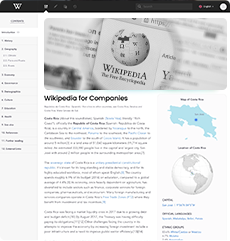
Politically sensitive pages translated with extra care around neutrality and locally reliable sourcing.
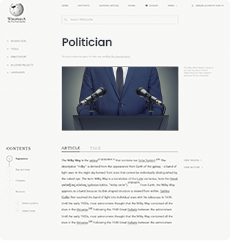
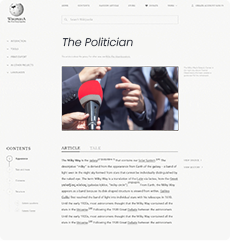
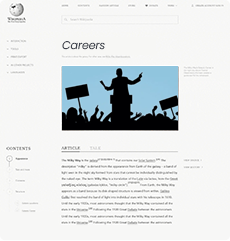
Academic and professional biographies translated with field-specific terminology handled by qualified native speakers.
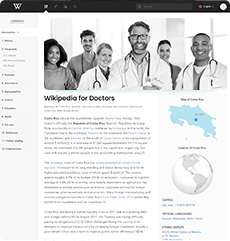
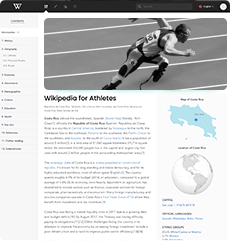
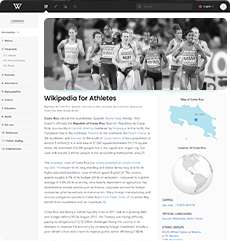
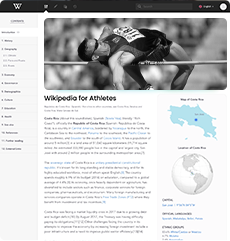
Sports biographies translated for markets where the athlete has an active fan or media following.
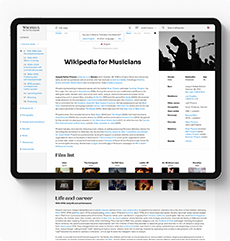
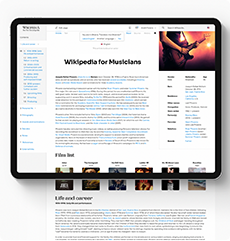
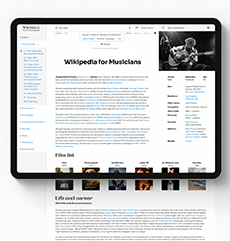
Artist pages localised for regional audiences, with discography and coverage sourced in-language.
Every draft is human-translated, then human-reviewed. No auto-translate shortcuts.
We treat each language edition's rules as distinct, not identical to English Wikipedia.
Available on retainer to keep every language version accurate as facts change.
Coverage across major world languages, sourced via qualified native-speaking translators.
Direct translation is the easy part — knowing that French Wikipedia's sourcing expectations aren't identical to Spanish Wikipedia's, and that a literal translation can read as promotional in a language it wasn't written for, is what separates a page that survives from one that gets flagged within days.
Language shouldn't determine how accurate or complete your public record is. Too many multilingual Wikipedia pages exist as rough machine translations of the English original, missing local sources, mistranslated details, or written in a tone that doesn't match that edition's expectations. We treat every language version as its own careful piece of work.
Our mission is a consistent, accurate record across every language your audience actually searches in — not just the one the page happened to start in.
 Address
7234 W North Ave Ste 208, Chicago, IL 60707, US
Professional Wiki Help is not affiliated with, endorsed by, or connected to Wikipedia or the Wikimedia Foundation. We provide independent consultancy services and operate in accordance with Wikipedia's Terms of Use, including its paid-contribution disclosure requirements. Each language edition of Wikipedia is independently maintained by its own community, and no service can guarantee approval or permanence of a translated page on any edition.